Sorry it's so late, but I thought I'd post the trailer for next month's 50th anniversary episode of Doctor Who, "The Day of the Doctor".
Awesome, isn't it? I'm actually looking forward to watching this.
Showing posts with label Hamlet Au. Show all posts
Showing posts with label Hamlet Au. Show all posts
Tuesday, October 29, 2013

Wednesday, February 20, 2013
One Billion Rising in Second Life: How Effective Was It?
Apparently an event took place recently that was devoted to dancing in hopes of raising awareness of the one billion human beings on the planet, mostly women and children, who suffer daily violence including rape. It was called, "One Billion Rising", and it was blogged about on New World Notes, where Hamlet Au quoted critics and supporters alike.
The main issue critics have is the effectiveness of such an event. It sought no donations, and I heard little or nothing about it through SL or the groups I'm in that frequently become involved in charity drives, which leads me to question just how important the event's organizers or Linden Lab think the issue of violence against women and children is given the lack of information-sharing. As a survivor of physical and emotional abuse, I would like to have known about an event that seeks to both raise awareness of the problem and, most importantly, find solutions.
That seems to be the basis of the detractors' criticisms. What was actually done to raise awareness of the issue? We know that roughly one billion human beings — one seventh of the total estimated population — go through each day being beaten, raped, killed, or facing some other kind of violence, be it physical, mental, or emotional. Most of the violence is carried out against humanity's most vulnerable members: women and children. Okay, that's important information we need to know: how widespread is the problem and whom does it affect the most?
Missing from the event was any real discussion as to what can and should be done to end the violence. Other than throwing a big in-world dance party (the event took place across four connected regions), what did the organizers really accomplish? What did they really hope to accomplish? Answers to these and other questions don't appear to be forthcoming.
I don't doubt the sincerity or the good intentions of OBR's organizers. What I question is their effectiveness and the way they are going about their stated mission. It's all well and good to gather survivors in one place to provide each other with much needed emotional support. But more than that is needed if we as a species are to find ways to end violence against each other, to break the endless cycles and save lives.
Some things that can be done to make future events more effective include, but are not limited to:
These and other steps should be taken to ensure that future OBR events are more successful in achieving their goals. It's a worthy cause, one worth devoting time, effort, and money to. Let's work to make the cause an effective one.
The main issue critics have is the effectiveness of such an event. It sought no donations, and I heard little or nothing about it through SL or the groups I'm in that frequently become involved in charity drives, which leads me to question just how important the event's organizers or Linden Lab think the issue of violence against women and children is given the lack of information-sharing. As a survivor of physical and emotional abuse, I would like to have known about an event that seeks to both raise awareness of the problem and, most importantly, find solutions.
That seems to be the basis of the detractors' criticisms. What was actually done to raise awareness of the issue? We know that roughly one billion human beings — one seventh of the total estimated population — go through each day being beaten, raped, killed, or facing some other kind of violence, be it physical, mental, or emotional. Most of the violence is carried out against humanity's most vulnerable members: women and children. Okay, that's important information we need to know: how widespread is the problem and whom does it affect the most?
Missing from the event was any real discussion as to what can and should be done to end the violence. Other than throwing a big in-world dance party (the event took place across four connected regions), what did the organizers really accomplish? What did they really hope to accomplish? Answers to these and other questions don't appear to be forthcoming.
I don't doubt the sincerity or the good intentions of OBR's organizers. What I question is their effectiveness and the way they are going about their stated mission. It's all well and good to gather survivors in one place to provide each other with much needed emotional support. But more than that is needed if we as a species are to find ways to end violence against each other, to break the endless cycles and save lives.
Some things that can be done to make future events more effective include, but are not limited to:
- First figure out exactly what, besides throwing a big in-world party, organizers hope to accomplish. Is the purpose to educate people? What information can be provided to raise awareness not only of the nature and scope of the problem, but solutions?
- Plan out well in advance how many people organizers wish to reach and prepare ahead of time — at least a year. The IFT Sci-Fi Alliance begins planning for its Relay For Life fund-raising activities as soon as the previous event ends. It's a year-round crusade and there are no holidays. Events are planned and, most importantly, hyped for months prior to the start of RFL activities. Tens of thousands of SL residents learn about RFL-related events months before things start happening. OBR could take a few pages out of the RFL playbook on this one.
- Is there any fund-raising apparatus in place to send money to non-profit organizations that seek to assist victims of violence in escaping their situations to better, violence-free lives, such as RAINN? If not, shouldn't there be one? If so, what accountability measures are in place to ensure that funds are actually going to organizations that are working to help end the violence? RAINN and similar organizations may have a presence in SL, and if they don't, it would be very good to reach out to their members in-world to work out some kind of arrangement, like RFL and the American Cancer Society have with their donation kiosks.
- Generating mass discussions among abuse survivors can go a long way toward helping. People who've found ways to escape could share their stories, thus inspiring and informing others who haven't been so lucky to get the help they need to empower themselves and get away from the violence.
These and other steps should be taken to ensure that future OBR events are more successful in achieving their goals. It's a worthy cause, one worth devoting time, effort, and money to. Let's work to make the cause an effective one.
Monday, October 1, 2012
Institutional Wishful Thinking: Why Steam Won't Save Second Life
New World Notes has taken to deleting my comments when made from certain terminals, so to bring a long-running debate from there over here I'm including a screen capture along with a copy-paste.
Recently there has been a debate over the issue of Linden Lab's outrageously overpriced land model, which forces users to fork over one thousand U.S. dollars and an additional two hundred ninety-five dollars a month for server maintenance. Hamlet Au has given his reasons for why he thinks Linden Lab won't be lowering prices any time soon: it would have, in his opinion, a crippling short term effect on the company's bottom line, speculation that has little basis in fact. The reason for his opinion? It would hurt the five hundred or so land barons who make their living, most only barely, renting out virtual real estate.
The flaw in Hamlet's reasoning has always been the assumption that an across-the-board price cut wouldn't be compensated for by an influx of new and returning customers. But Desmond Shang, a small land baron, stated in comments that he agrees that land tier prices have to come down sooner or later, and he was invited to post his own guest entry on New World Notes. That entry led to some unreasonably hostile responses in-thread, which led to Hamlet expanding on one that piqued his interest.
Unfortunately, Hamlet seems to be clinging to the notion that Second Life can be successfully marketed as a gaming platform even though Linden Lab has not developed and is not developing the tools that will make it attractive to hardcore RPG gamers.
Well, no it isn't, and my response is posted below with some additions.
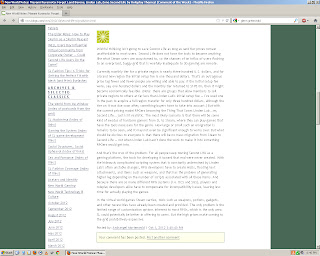
The reason is this: Wishful thinking isn't going to save Second Life, and having a link on Steam isn't going to do it either as long as land tier prices remain unaffordable to most users. This point cannot be stressed enough. Second Life does not have the tools to become anything like what Steam users are accustomed to, so the chances of an influx of users flocking to an overpriced, buggy grid that is woefully inadequate to 3D gaming are remote.
Currently monthly tier for a private region is nearly three hundred U.S. dollars, and for a brand new region the initial setup fee is one thousand dollars. That's an outrageous price tag fewer and fewer people are willing and able to pay. If the initial setup fee were, say, one hundred dollars and the monthly tier returned to $195.00, then it might become economically feasible. (Note: there are groups that allow members to sell private regions to others at far less than Linden Lab's initial setup fee — I've used one in the past to acquire a full region transfer for only three hundred dollars, although the tier on it was due soon after, something buyers have to take into account.) But with the current pricing model RPGers becoming the Thing That Saves Linden Lab...er, Second Life...just isn't realistic. The most likely scenario is that there will be some kind of exodus of hardcore gamers from SL to Steam, where they can play games that have the tools necessary for the genre. How large or small such an emigration is remains to be seen, and it may not even be significant enough to worry over. But what should be obvious to everyone is that there will be no mass migration from Steam to Second Life — not when Linden Lab hasn't done the work to make it into something RPGers would get into.
And that's the crux of the problem. For all people keep touting Second Life as a gaming platform, the tools for developing it toward that end were never created. With the hideously complicated scripting system that is constantly undermined by Linden Lab's often unstable changes, RPG developers have to create HUDs, floating text attachments, and items such as weapons, and that has the problem of generating higher lag depending on the number of scripts associated with all these items. And because there are so many different RPG systems (i.e. DCS and SGS), players and roleplay developers alike have to compensate for incompatibility issues, leaving less time for actually playing the games.
In the virtual world games Steam carries, tools such as weapons, potions, gadgets, and other necessities have already been created and provided. The only problem is the limited range of customization options inherent to most RPGs, which is the only area SL could potentially be better in offering to users. But the high prices make coming to the grid prohibitively expensive.
With SL losing an estimated 8.3 regions every day to the ridiculously high prices, literally thousands of sims a year, at some point something's got to give, and it's going to have to be land prices. Baby steps toward making SL more affordable, as Desmond Shang has suggested, simply aren't going to do the trick. Land prices are going to have to come down to a reasonable level, because if they don't then Linden Lab is looking at financial bankruptcy within one or two years.
Recently there has been a debate over the issue of Linden Lab's outrageously overpriced land model, which forces users to fork over one thousand U.S. dollars and an additional two hundred ninety-five dollars a month for server maintenance. Hamlet Au has given his reasons for why he thinks Linden Lab won't be lowering prices any time soon: it would have, in his opinion, a crippling short term effect on the company's bottom line, speculation that has little basis in fact. The reason for his opinion? It would hurt the five hundred or so land barons who make their living, most only barely, renting out virtual real estate.
The flaw in Hamlet's reasoning has always been the assumption that an across-the-board price cut wouldn't be compensated for by an influx of new and returning customers. But Desmond Shang, a small land baron, stated in comments that he agrees that land tier prices have to come down sooner or later, and he was invited to post his own guest entry on New World Notes. That entry led to some unreasonably hostile responses in-thread, which led to Hamlet expanding on one that piqued his interest.
Unfortunately, Hamlet seems to be clinging to the notion that Second Life can be successfully marketed as a gaming platform even though Linden Lab has not developed and is not developing the tools that will make it attractive to hardcore RPG gamers.
As I said, I don't entirely agree with Masami -- for instance, I don't think this suggestion would preclude land barons like Desmond (who runs an RPG themed area himself). But with SL soon to launch on Steam, a roleplay focus seems to be an ideal solution to a lot of Second Life's problems.
Well, no it isn't, and my response is posted below with some additions.

The reason is this: Wishful thinking isn't going to save Second Life, and having a link on Steam isn't going to do it either as long as land tier prices remain unaffordable to most users. This point cannot be stressed enough. Second Life does not have the tools to become anything like what Steam users are accustomed to, so the chances of an influx of users flocking to an overpriced, buggy grid that is woefully inadequate to 3D gaming are remote.
Currently monthly tier for a private region is nearly three hundred U.S. dollars, and for a brand new region the initial setup fee is one thousand dollars. That's an outrageous price tag fewer and fewer people are willing and able to pay. If the initial setup fee were, say, one hundred dollars and the monthly tier returned to $195.00, then it might become economically feasible. (Note: there are groups that allow members to sell private regions to others at far less than Linden Lab's initial setup fee — I've used one in the past to acquire a full region transfer for only three hundred dollars, although the tier on it was due soon after, something buyers have to take into account.) But with the current pricing model RPGers becoming the Thing That Saves Linden Lab...er, Second Life...just isn't realistic. The most likely scenario is that there will be some kind of exodus of hardcore gamers from SL to Steam, where they can play games that have the tools necessary for the genre. How large or small such an emigration is remains to be seen, and it may not even be significant enough to worry over. But what should be obvious to everyone is that there will be no mass migration from Steam to Second Life — not when Linden Lab hasn't done the work to make it into something RPGers would get into.
And that's the crux of the problem. For all people keep touting Second Life as a gaming platform, the tools for developing it toward that end were never created. With the hideously complicated scripting system that is constantly undermined by Linden Lab's often unstable changes, RPG developers have to create HUDs, floating text attachments, and items such as weapons, and that has the problem of generating higher lag depending on the number of scripts associated with all these items. And because there are so many different RPG systems (i.e. DCS and SGS), players and roleplay developers alike have to compensate for incompatibility issues, leaving less time for actually playing the games.
In the virtual world games Steam carries, tools such as weapons, potions, gadgets, and other necessities have already been created and provided. The only problem is the limited range of customization options inherent to most RPGs, which is the only area SL could potentially be better in offering to users. But the high prices make coming to the grid prohibitively expensive.
With SL losing an estimated 8.3 regions every day to the ridiculously high prices, literally thousands of sims a year, at some point something's got to give, and it's going to have to be land prices. Baby steps toward making SL more affordable, as Desmond Shang has suggested, simply aren't going to do the trick. Land prices are going to have to come down to a reasonable level, because if they don't then Linden Lab is looking at financial bankruptcy within one or two years.
Monday, August 20, 2012
More Regions Disappearing from SL
Over at New World Notes Hamlet Au is disappointed to learn that one of the Next Big Things to save Second Life isn't doing what he hoped it would, namely, turn SL into the gamers' paradise he apparently wants it to be. This latest revelation comes on the heels of his blog entry last week that hyped the "publish[ing]" of SL "on Valve's Steam distribution network", which is apparently the latest Next Big Thing that will save SL from the slow disintegration of the grid.
Some people are joining Hamlet in hyping this Steam thing as the feature that will bring swarms of 25-40-year-olds to the grid, injecting new life into it and making up for the loss of regions that has been taking place over the last couple of years. Others are downplaying these developments as not having any significant impact on the number of new users to SL, and I happen to be among that crowd. And there's a reason why we don't expect this to take off: the high price of land in SL and the inescapable fact that Second Life is simply not a gaming platform. It never was and never will be.
A popular region called Hosoi just announced that, because of financial difficulties, the sim owner is forced to close it down and leave the grid. And it's not just one but four full regions shutting down.
Now, this should not be surprising to anyone who has kept up with news of SL on NWN. In May and September last year, and in June of this year forecasts predict a ten percent loss of privately-"owned" regions. The single biggest reason for these region losses is the ridiculously high price of land in SL, with Linden Lab charging people up to $1,000.00 USD to buy a new region and $295.00 USD a month for maintenance fees on the server that houses it. And since servers are shared by several regions, this means that each server brings in many hundreds if not thousands of dollars a month. It's a pricing model that only barely worked back in 2006, when there was still the illsuion maintained that the U.S. and world economies were somewhat strong. But that illusion ended in 2008 — four years ago — and it is just plain stupid to expect people to sustain what has become an outrageously expensive luxury when most of us are not even able to earn a living wage and the ones who are able are finding their savings being gobbled up by everything from higher food prices to economically-crippling medical bills.
Now, the simplest solution to bring in more revenue is to cut region prices by one half to two thirds, making SL land pricing competitive with grids such as OpenSim and InWorldz, both of which charge less than $100.00 USD for private islands — both the initial buying price and the monthly server maintenance fee are around $75.00) — and provide far more resources for those regions. Linden Lab currently allows only 15,000 primitives (the basic building blocks that are used to generate the amazing constructs users have made over the years). InWorldz allows up to 45,000. If you had a choice between paying $75 a month for 45,000 prims and shelling out $295 a month for 15,000 prims, the choice really doesn't even exist. You'd opt for a grid that charges far less and gives you far more for what you're paying.
That's exactly what SL region owners are doing. OpenSim was reported this past February as having experienced a small explosion of new users flocking over from the ridiculously expensive Second Life, a healthy increase following a December 2011 report that OpenSim gained 915 regions with InWorldz being the busiest of the independent virtual grids.
It is simply foolish to market something that isn't a gaming platform as a gaming platform, especially when none of the tools are present for turning it into one and the interest from users isn't there. But that's exactly what Linden Lab insists on doing, and with its primary revenue base drying up without a replacement to make up for the losses, the company really can't expect to fund all the non-SL projects it wants to. The latest deal with Steam may be an attempt to secure a new revenue source, but I can think of plenty of more efficient, more viable ways to increase it than by trying to attract gamers from one virtual environment to one that is not set up for gaming.
That's why the Bloodlines clan I belong to is trying to raise funds for a full year for the Nocturne Project. Until or unless Linden Lab wises up and dramatically lowers land tier prices, it's just prohibitively expensive to try and maintain a full region unless you have the business acumen to rent it out at a price that bring in a healthy profit. You can have mesh and pathfinding and all the deals with Cloud and Steam and whatever going on, but at the end of the day it's still the economy stupid. And if Linden Lab refuses to wake up to that reality, it's going to price itself out of business within a few more years.
For an alternative take on this subject, go here.
Some people are joining Hamlet in hyping this Steam thing as the feature that will bring swarms of 25-40-year-olds to the grid, injecting new life into it and making up for the loss of regions that has been taking place over the last couple of years. Others are downplaying these developments as not having any significant impact on the number of new users to SL, and I happen to be among that crowd. And there's a reason why we don't expect this to take off: the high price of land in SL and the inescapable fact that Second Life is simply not a gaming platform. It never was and never will be.
A popular region called Hosoi just announced that, because of financial difficulties, the sim owner is forced to close it down and leave the grid. And it's not just one but four full regions shutting down.
Now, this should not be surprising to anyone who has kept up with news of SL on NWN. In May and September last year, and in June of this year forecasts predict a ten percent loss of privately-"owned" regions. The single biggest reason for these region losses is the ridiculously high price of land in SL, with Linden Lab charging people up to $1,000.00 USD to buy a new region and $295.00 USD a month for maintenance fees on the server that houses it. And since servers are shared by several regions, this means that each server brings in many hundreds if not thousands of dollars a month. It's a pricing model that only barely worked back in 2006, when there was still the illsuion maintained that the U.S. and world economies were somewhat strong. But that illusion ended in 2008 — four years ago — and it is just plain stupid to expect people to sustain what has become an outrageously expensive luxury when most of us are not even able to earn a living wage and the ones who are able are finding their savings being gobbled up by everything from higher food prices to economically-crippling medical bills.
Now, the simplest solution to bring in more revenue is to cut region prices by one half to two thirds, making SL land pricing competitive with grids such as OpenSim and InWorldz, both of which charge less than $100.00 USD for private islands — both the initial buying price and the monthly server maintenance fee are around $75.00) — and provide far more resources for those regions. Linden Lab currently allows only 15,000 primitives (the basic building blocks that are used to generate the amazing constructs users have made over the years). InWorldz allows up to 45,000. If you had a choice between paying $75 a month for 45,000 prims and shelling out $295 a month for 15,000 prims, the choice really doesn't even exist. You'd opt for a grid that charges far less and gives you far more for what you're paying.
That's exactly what SL region owners are doing. OpenSim was reported this past February as having experienced a small explosion of new users flocking over from the ridiculously expensive Second Life, a healthy increase following a December 2011 report that OpenSim gained 915 regions with InWorldz being the busiest of the independent virtual grids.
It is simply foolish to market something that isn't a gaming platform as a gaming platform, especially when none of the tools are present for turning it into one and the interest from users isn't there. But that's exactly what Linden Lab insists on doing, and with its primary revenue base drying up without a replacement to make up for the losses, the company really can't expect to fund all the non-SL projects it wants to. The latest deal with Steam may be an attempt to secure a new revenue source, but I can think of plenty of more efficient, more viable ways to increase it than by trying to attract gamers from one virtual environment to one that is not set up for gaming.
That's why the Bloodlines clan I belong to is trying to raise funds for a full year for the Nocturne Project. Until or unless Linden Lab wises up and dramatically lowers land tier prices, it's just prohibitively expensive to try and maintain a full region unless you have the business acumen to rent it out at a price that bring in a healthy profit. You can have mesh and pathfinding and all the deals with Cloud and Steam and whatever going on, but at the end of the day it's still the economy stupid. And if Linden Lab refuses to wake up to that reality, it's going to price itself out of business within a few more years.
For an alternative take on this subject, go here.
Monday, August 6, 2012
Kickstarter Project! (And NWN Fail)
Okay, part of the title is called 'NWN Fail'. Gonna get that right out of the way now before launching into the bigger and better news. That part of this entry's title isn't really meant to come off looking like it does, because the discussion was actually a lively one. New World Notes had a thread going that posited three ways to salvage SL, only two of which the author thinks are even worth trying to get Linden Lab to change its collective mind about. That third way, lowering tier prices, is actually about the only way Linden Lab will be able to save not only Second Life but also any future prospects for its own, non-SL projects.
Okay, to sum up, the SL land barons that provide LL with the majority of its revenue are steadily closing up and leaving the grid for greener, more affordable pastures. With the economy still in the toilet and no sign of emerging any time this decade, Linden Lab's outrageously high tier prices have got people deciding that they just can't afford SL anymore. Builders and scripters can't peddle their wares on the grid itself, where most SLers congregate (the marketplace revamps haven't allowed sellers to make up the losses enough to justify using that as their primary business home base), and gamers can't afford to create vibrant, sustainable roleplaying experiences because land is prohibitively expensive. The blog author thinks that by converting SL into a spiffy gaming platform, people with money to spend will come. And he can't seem to understand that what's preventing people from coming is the very finite financial resources that are less and less at their disposal every day that passes. Sinply put, SL is degrading into a haven only for the monied elite who can afford to toss away $295.00 USD a month on region tier, and even they're waking up and starting to realize that there's no more profit to be had renting virtual land since fewer and fewer people can afford to rent it. So they're leaving while they still have a chance to get out and not lose a ton of money.
You can have all the ideas for gaming engines and pathfinding and mesh and every other Next Big Thing you want, but at the end of the day, if people find it too expensive to use they're not going to buy it. That's just plain common business sense. It's all about the money, and when demand is low you need to price low to increase demand. Otherwise you'll price yourself out of business.
So, having gotten that out of the way, I'm going to tell you about a project some friends of mine are trying to pull off using Kickstarter. Back in March I read about a tinies group in SL that wanted to build a roleplaying region in SL with plans for expanding it to other media as well as doing charity work. So they created a project on Kickstarter with the fund-raising goal of $8,500.00 USD. They exceeded it to raise a total of over $11,000.00.
That gave us the idea to try it ourselves. Hell, if a bunch of people who enjoy roleplaying tiny forest creatures can raise that kind of money, maybe we can do it for what we want to do. Now, it's no secret that Bloodlines doesn't exactly have a pristine reputation in SL. The idea started out with merit: create a vampire RP system that lets players be vampires, and later werewolves (or lycans, as the game calls them) were added. Only the system quickly earned a bad rep, and I suspect it has mostly to do with the failure to properly account for the casual noobs who get the system, go around annoying people with bite requests, and then leave once they get bored (or banned enough times that they give up). Worse is that with blood barrels and lumen prisms (the werewolf equivalent of blood barrels) being transferrable (albeit no-copy), people realized they could buy at rock-bottom prices from departing or desperate players and sell at a profit with prices that are less than what the Bloodlines official stores sell. Similarly, players trade the "souls" they collect within the system for profit and to stack their stats.
In other words, Bloodlines quickly devolved into a money-making scheme that saw the intended gameplay dry up except for the dedicated RPers who have money enough to own their own regions but for various reasons haven't tried expanding those sims the way the tinies group is doing.
That's where the Nocturne Project comes in.
The backstory is a post-apocalyptic tale that sees the human race conquered by vampires, werewolves, demons, fallen gods, and other creatures of myth and legend, following a global environmental disaster. Society quickly returns to a feudal system under the rule of their supernatural overlords, with modern technology gradually giving way to medieval-style tech and methods. This roleplay region is designed to cater to dedicated Bloodlines players, complete with a war arena (based on the capture-the-flag model), a social area for hunting and partying, and a shopping area for vendors to sell themed wares.
But beyond the Bloodlines aspect, the Nocturne project will also cater to general roleplaying needs, with an involving backstory lending itself to the atmosphere to create an experience that will keep people coming back. If this works out we'll be able to expand to other media as well.
We've already got $251.00 pledged so far, but our goal is $10,000.00 with a deadline of September 16th. That's now just over a month away. Can we do it? I'm confident we can, but we need your help — and your donations. Please visit the Kickstarter page and pledge as much as you can afford. The fund-raising goal was set to allow us to keep the sim running for its first year. If we can raise the money necessary we'll have the sim up and running within a month. Check us out and come back for updates!
Okay, to sum up, the SL land barons that provide LL with the majority of its revenue are steadily closing up and leaving the grid for greener, more affordable pastures. With the economy still in the toilet and no sign of emerging any time this decade, Linden Lab's outrageously high tier prices have got people deciding that they just can't afford SL anymore. Builders and scripters can't peddle their wares on the grid itself, where most SLers congregate (the marketplace revamps haven't allowed sellers to make up the losses enough to justify using that as their primary business home base), and gamers can't afford to create vibrant, sustainable roleplaying experiences because land is prohibitively expensive. The blog author thinks that by converting SL into a spiffy gaming platform, people with money to spend will come. And he can't seem to understand that what's preventing people from coming is the very finite financial resources that are less and less at their disposal every day that passes. Sinply put, SL is degrading into a haven only for the monied elite who can afford to toss away $295.00 USD a month on region tier, and even they're waking up and starting to realize that there's no more profit to be had renting virtual land since fewer and fewer people can afford to rent it. So they're leaving while they still have a chance to get out and not lose a ton of money.
You can have all the ideas for gaming engines and pathfinding and mesh and every other Next Big Thing you want, but at the end of the day, if people find it too expensive to use they're not going to buy it. That's just plain common business sense. It's all about the money, and when demand is low you need to price low to increase demand. Otherwise you'll price yourself out of business.
So, having gotten that out of the way, I'm going to tell you about a project some friends of mine are trying to pull off using Kickstarter. Back in March I read about a tinies group in SL that wanted to build a roleplaying region in SL with plans for expanding it to other media as well as doing charity work. So they created a project on Kickstarter with the fund-raising goal of $8,500.00 USD. They exceeded it to raise a total of over $11,000.00.
That gave us the idea to try it ourselves. Hell, if a bunch of people who enjoy roleplaying tiny forest creatures can raise that kind of money, maybe we can do it for what we want to do. Now, it's no secret that Bloodlines doesn't exactly have a pristine reputation in SL. The idea started out with merit: create a vampire RP system that lets players be vampires, and later werewolves (or lycans, as the game calls them) were added. Only the system quickly earned a bad rep, and I suspect it has mostly to do with the failure to properly account for the casual noobs who get the system, go around annoying people with bite requests, and then leave once they get bored (or banned enough times that they give up). Worse is that with blood barrels and lumen prisms (the werewolf equivalent of blood barrels) being transferrable (albeit no-copy), people realized they could buy at rock-bottom prices from departing or desperate players and sell at a profit with prices that are less than what the Bloodlines official stores sell. Similarly, players trade the "souls" they collect within the system for profit and to stack their stats.
In other words, Bloodlines quickly devolved into a money-making scheme that saw the intended gameplay dry up except for the dedicated RPers who have money enough to own their own regions but for various reasons haven't tried expanding those sims the way the tinies group is doing.
That's where the Nocturne Project comes in.
The backstory is a post-apocalyptic tale that sees the human race conquered by vampires, werewolves, demons, fallen gods, and other creatures of myth and legend, following a global environmental disaster. Society quickly returns to a feudal system under the rule of their supernatural overlords, with modern technology gradually giving way to medieval-style tech and methods. This roleplay region is designed to cater to dedicated Bloodlines players, complete with a war arena (based on the capture-the-flag model), a social area for hunting and partying, and a shopping area for vendors to sell themed wares.
But beyond the Bloodlines aspect, the Nocturne project will also cater to general roleplaying needs, with an involving backstory lending itself to the atmosphere to create an experience that will keep people coming back. If this works out we'll be able to expand to other media as well.
We've already got $251.00 pledged so far, but our goal is $10,000.00 with a deadline of September 16th. That's now just over a month away. Can we do it? I'm confident we can, but we need your help — and your donations. Please visit the Kickstarter page and pledge as much as you can afford. The fund-raising goal was set to allow us to keep the sim running for its first year. If we can raise the money necessary we'll have the sim up and running within a month. Check us out and come back for updates!
Subscribe to:
Posts (Atom)